Wednesday, June 30, 2010

Blueberry Pudding


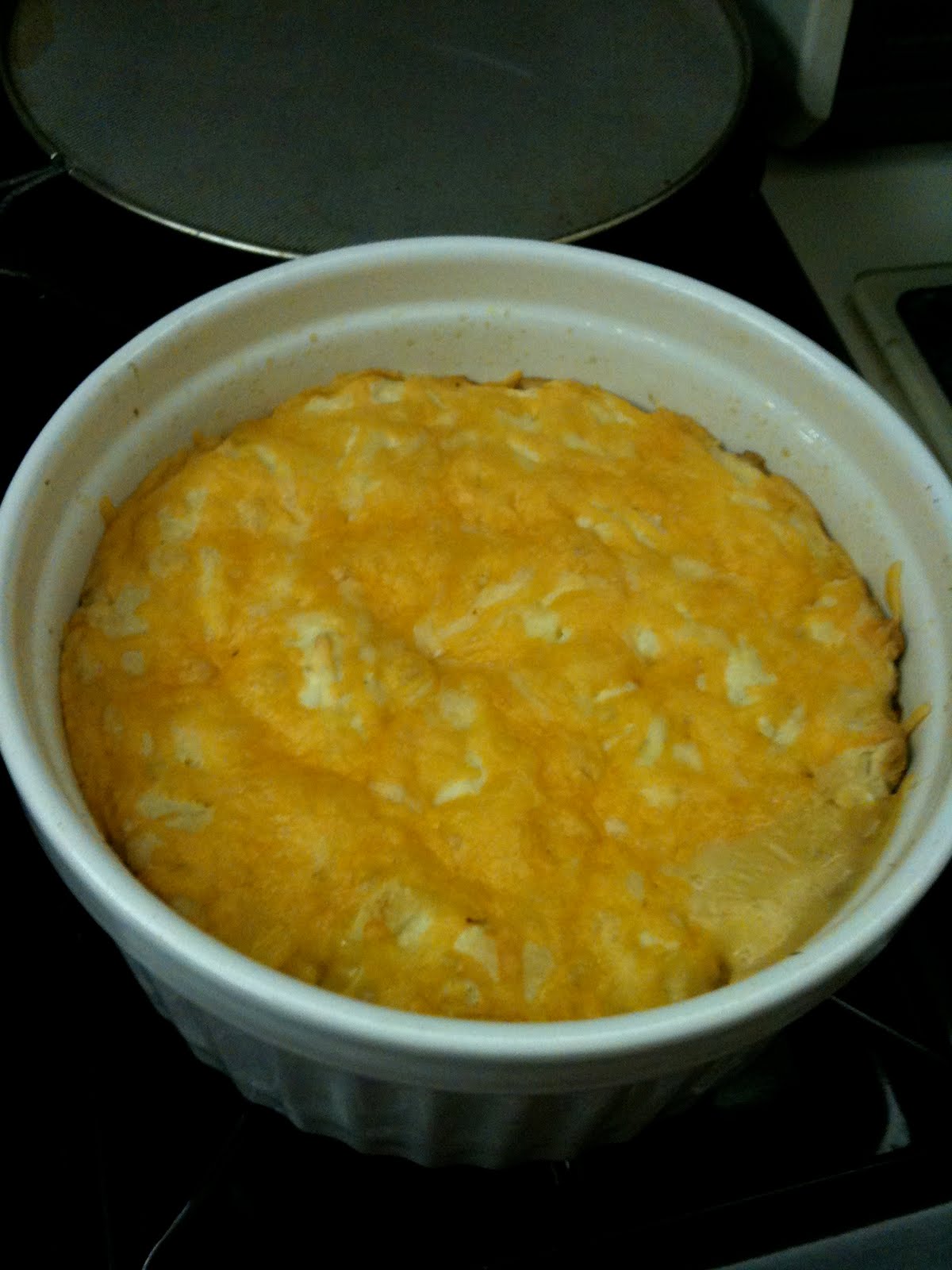
Here’s a recipe that tends to confuse my friends who grew up with Bill Cosby’s ads for Jell-O pudding. It’s not like what most of us in the US think of as a pudding at all, but that’s what it’s called nonetheless. A quick trip to Google reveals that this is far from the only recipe for a cake-type blueberry pudding, but most of them look more elaborate than Grandma’s version. I’m not too surprised—this is a Pennsylvania Dutch recipe if ever there was one, and we’re good at food that’s good, filling, and really quite simple.

Each summer, Gma would issue an invitation to come over for either blueberry or cherry pudding for dinner one night. (I’d love to make a cherry pudding as well, but have had trouble finding sour cherries, which makes that difficult.) We’d pile into the car and head over for this annual treat. There are several recipes for either cherry or blueberry pudding in her recipe box, but I went with the one that says, “best one” in the corner. 


Tuesday, June 8, 2010

Yaki Soba


If you're looking at the title of this post and thinking that it sounds a little off for this blog, you're right. Yaki soba is very definitely not anything my grandmother, or her mother, would have recognized. It is, however, my favorite dish from my favorite UK restaurant, Wagamama (which now has locations in Boston and Washington, DC--why nothing in New York I still don't understand!). Wagamama takes Japanese cuisine and puts its own spin on it. Since I have to travel pretty far to get my grubby mitts on the real thing, I have both Wagamama cookbooks, but I never had the nerve to try making yaki soba myself until two things happened:

1. I found beni shoga--also known as pickled red ginger--at my local Asian market.
2. I had a houseguest from China who loves to cook.

Yaki soba isn't Chinese, of course--it's very definitely Japanese--but I figured an Asian cook would take to it more naturally than I might. In the end, it was relatively simple and I probably should have been brave enough to give it a whirl on my own. It was more fun to do it this way, though.

Without further ado, I present the recipe from Wagamama: The Way of the Noodle (which has a recipe looks more accurate to my experience than the Wagamama cookbook does--the recipes are, for some reason, not the same, and I can say without hesitation that sushi ginger is not only NOT the same as beni shoga, but would be vastly inferior in this recipe). It's now out of print, from the look of things, probably superceded by the later cookbook.


Sunday, May 16, 2010

Deep Dish Tuna Pie

It's been a month since my last post, which would be hard to believe if I hadn't spent it wrapping up two part time jobs in the last two weeks of April so I could start a new full-time gig at the beginning of this month. I also find it more fun to cook when friends come over, and it's been a few weeks since we last got together. Tonight, however, everyone was here and I decided to tackle the Deep Dish Tuna Pie.

I don't ever remember Grandma making this. I don't really remember anything like it, either, but I could just be forgetting. I picked it because it looked pretty straightforward, I had most of the ingredients on hand, and I was thrilled to find something that looked good that wasn't a cake or a cookie. In all honesty, that's the largest section in this recipe box, and attempting to alternate those recipes with things that aren't, say, loaded with sugar can be a challenge. So this recipe looked perfect when I found it a few nights ago. It's clipped out of a newspaper, and while I made a few minor modifications, I pretty much followed the recipe as it's laid out.

Deep Dish Tuna Pie

1 can (1 pound) peas
1 can cream of celery soup
1 teaspoon salt
1/4 teaspoon each pepper and thyme
1 can (4 oz.) pimiento, diced
3 cans tuna in vegetable oil
1/2 cup milk
1 cup prepared biscuit mix
1 cup grated process American cheese

Drain liquid from peas; reserve 1/2 cup. Combine reserved liquid with undiluted soup, salt, pepper, and thyme in saucepan. Bring to a boil, stirring constantly. Remove from heat, add drained peas, pimiento, and tuna. Add milk to biscuit mix. Stir with fork to make soft dough. Turn tuna-vegetable mixture into a 2-quart casserole. Spread biscuit dough over top. Sprinkle with grated cheese. Bake in a moderately hote oven (400F) 20 minutes. Serves 6.

I have to say that unless I am feeling especially nostalgic for the elementary school lunches of my childhood, I don't eat canned peas. I bought a 1-pound bag of the frozen variety instead and eyeballed about how many I might need. I thawed about 2/3 of the bag and used slightly less than that when I actually added them to the mixture. You'll know when it looks about right. I also only used one can of tuna in oil, just in case it actually made a difference (I don't think it does). And since I didn't have liquid to reserve from the peas that weren't canned, I mixed water and milk to make 1/2 cup instead. Can't imagine that made a big difference, either. Finally, the idea of grated American cheese really made me raise my eyebrows, so I used a mix of various New England sharp cheddar cheeses instead, which I'm sure tasted a whole lot better than American would have. (Does anyone actually know what American cheese is? Aside from something that I only use in grilled cheese or cheeseburgers?) I didn't bother to measure it--I just sprinkled it on top until it looked fairly well covered.

Finally, I'm not really sure who might be able to spread that dough on top of something that is essentially liquid, but I sure wasn't seeing how that idea didn't completely defy the laws of physics, so I didn't even try. I parceled it out by teaspoons, dropping it until I'd pretty much covered the top. That worked pretty well and I'm sure was less frustrating (and less messy!) than the alternative.

All told, we all thought this recipe came out quite well, and it really takes no time to put it together and bake it. I probably spent more time looking for a dish that looked like it would hold two quarts (not my trusty 8x8 pan this time!) than I did throwing it all together, so it'd be a great, easy weeknight main dish.

Saturday, April 17, 2010

Absolute culinary disaster

Or...Sugar Cakes: The Nightmare. (Where's Gordon Ramsay when you need him?)

I always thought that sugar cakes were a Pennsylvania Dutch treat, so you can imagine my shock a few years ago when I asked the folks at the local Amish market (we apparently import actual Amish folks from Ronks, PA into this part of New Jersey to provide us with things like shoo-fly pie and whoopie pies) about them, and got looks that implied I had begun to channel spirits in Arabic. How could they not know about sugar cakes??

I've since concluded that sugar cakes, as I know them, must be a York County phenomenon. Lancaster has apparently never heard of them (Ronks is in Lancaster County). Neither has Linda, who grew up not far from Allentown. And alas, thanks to the aforementioned culinary disaster, I have no photographic evidence to demonstrate just what I'm talking about, so I shall have to describe them and hope for the best. (I can't even find any photos online. Rats!)

The only way I know of to describe a sugar cake is to borrow from the humble (but delicious) whoopie pie. If you're familiar with a whoopie pie, you know that it's sort of like an overgrown Oreo, where the wafers are actually small individual cakes, flat on one side and somewhat domed on the top. In between, there's a creamy filling. (If you're not from areas that have whoopie pies, the first thing I need you to understand is that these are NOT MOON PIES. They are nothing alike. Not even a little. For one, absolutely no marshmallow is harmed in the making of a whoopie pie. For another, whoopie pies look like this. Nabisco totally swiped the idea and now provides a super-processed and preservatived shelf version that they call Cakesters.)

Sugar cakes are like the cake part of the whoopie pie, only without the cocoa. They're slightly yellow, pack a bit of a vanilla hit, and are domed. They usually have granulated sugar sprinkled on the top.

Linda was curious about these treats, having heard me mention them on many occasions, and ventured forth to help concoct them. Little did she know what awaited her.

Gma's recipe is one cut out of the local newspaper. Bear's Department Store was a fixture in downtown York, right on the Square, until I was a small child (I barely remember it), and it was famous for its cafeteria. Gma clipped the recipe for Bear's sugar cakes and stuck it in her box, where I found it. It's not complicated--flour, sugar, vanilla, buttermilk, baking powder, baking soda in a little vinegar...what could possibly go wrong?

Wednesday, March 31, 2010

Miss Snell's Chocolate Cake


It's been ages since I've updated, and I apologize for that--a new part-time job has eaten into my evenings and weekends, making it more difficult to find time to post, much less do the actual cooking! I'm back, though, with a real family recipe...sort of.

Janis Snell was a math teacher at my high school. I had her Algebra II class a few years before she retired; my dad had her for Trig shortly after she started there. By the time I got to York Suburban High School, she was an institution, and most of the kids were scared of her (and some flat out hated her). I, on the other hand, was doubly blessed by fate: not only did I land in a class with only 7 other students (her other Alg. II class had nearly 30), but I'd also been hearing very affectionate stories about her my entire life. She probably won me over the first time I heard her refer to the teachers on morning duty, who wouldn't let you in to see a teacher without a note, which you couldn't get because you didn't know the night before that you might need it, as "the gestapo." By the time I went off to college, she'd saved me from the heinous fate of trying to teach myself calculus from a college textbook over the summer, and I was forever in her debt.

When I got to the high school, even the kids who didn't like her were in awe of Snell Fudge. You knew you'd arrived if you were awarded with a box, either peanut butter or chocolate peanut butter. I remember the day the football team won the district championship and a special pep rally had been called to celebrate. In walked Miss Snell with a tray loaded with boxes of fudge. The whole place erupted. Back when my dad was her student, though, she was known for her chocolate cake. I couldn't figure out what was the matter with him when he first mentioned it, figuring that surely he was confused and meant chocolate fudge, but no, it was cake, as I discovered the day that I went in for help after school and was told, "Well, it seems I'm probably not going to turn you into a mathematician, so I might as well turn you into a cook instead." I walked home with a copy of the chocolate cake recipe. When I told my parents, you'd have thought she'd given me the Holy Grail instead.

My copy of this recipe is long gone, but Grandma had it in her box, and I couldn't resist giving it a whirl. The last time I'd made it was about 20 years ago, so this was a lot like making it for the first time. I followed the recipe exactly except for two things. I used Smart Balance rather than shortening, mostly because my shortening is ancient and should be tossed, though I also hear the word "shortening" and swear I can feel my arteries harden. I also, after blinking a few times in disbelief at the recipe as written, did not mix the dry ingredients into the wet ones. I just couldn't imagine that I wouldn't end up with very lumpy batter, so I mixed wet into dry, which worked just fine. (I basically kept wet with wet and dry with dry despite the directions, so the baking powder/soda went in with the flour and the vanilla went into the liquid before I mixed the two together.) The recipe doesn't specify how big the pan should be, but I was pretty sure we had used an 8x8 pan before, so that's what I went with. It worked pretty well, though I was worried about halfway through the baking that it was going to overflow the dish and make a royal mess. It turned out to be just perfect, though it did settle a bit in the middle.

Since I scanned this recipe for a friend, I'm going to include the scan here. The recipe is typed up below.


Miss Snell's Chocolate Cake

1 egg
1 cup sugar
2 tablespoons shortening
4 tablespoons (1/4 cup) cocoa
dash of salt
1 cup buttermilk
1 teaspoon baking powder
1 teaspoon baking soda
1 cup flour
1 teaspoon vanilla

Cream first four items, then put in liquid and add flour and vanilla. Bake for 30 minutes at 350.

Tuesday, February 16, 2010

Fasnacht Day!

Now, this is a true example of Pennsylvania Dutch cuisine. It seems to have come from the Swiss rather than the Germans, but in the US, you'll have a tough time finding a fasnacht outside of PA Dutch country. (Believe me, once a year I'd give an eye tooth to find one here in Jersey, and all I get in response is a weird look from people who think I've just begun speaking in tongues.)

Fasnachts are similar to doughnuts, but are potato based. They can be made with or without holes. As with many other foods traditional to Shrove Tuesday, they were made to use up the ingredients that would not be used during Lent (in this case, lard). When I was a kid, we'd always get fasnachts on Shrove Tuesday; occasionally, they'd even have them on hand for school lunches. I have a very vague recollection of making them with my great-grandmother (not Sweetie--this one would be Gpa's mother), but if I was indeed only about three, as noted below, that certainly would explain why I don't recall it very clearly.

When I was in Nothern Ireland in 1996, I asked my mother to send me the recipe, figuring that I could make them for the day, just for fun. Then she sent the recipe and I found out it would make about 12 dozen, which was a lot even when you had seven people in the house, especially since they are, as my mom calls them, "little potato paperweights." That was the end of that idea.

I haven't had one of these in years, and would dearly love to make some, in keeping with the spirit of this blog, but I am but one lone woman, and there's no way I can handle even half of a recipe like this on my own. Alas, I can provide none of my own photos, though the links above will get you to a few, but I present the recipe anyway, for those of you more adventurous (and less concerned about appropriate Shrove Tuesday timing) than I.

And with that, I turn you over to my mother's email from 14 years ago, which contains some details about the recipe, some backstory about making them, and her own sense of humor, to boot. :)

Sunday, February 7, 2010

Egg and Olive

Egg and Olive is an old family favorite, and a very easy recipe. It's very regional--not just PA Dutch, but a subset thereof. It's popular in York County, and Google reveals that you can find it over in Lancaster, too, but Linda, who is from the Allentown area, has never heard of it. I've loved it since I was a kid, and am surprised at how violent the reaction I sometimes get from people who have never heard of it. I suppose the idea of adding olives and mustard to egg salad must sound strange if you didn't grow up with it, but it's a favorite in our family for as long as I can remember. I remember many occasions when I begged grandma to make some for me, and was very excited when she first showed me how. You can get this in many small restaurants in York County, but none of them ever served a version that was quite as good as hers. (Even in my own family, there have been disputes over the proper preparation of this dish. I confess, I'm a purist,b ut more on that later.)

This recipe, like many others, is one that Grandma made without a recipe. Fortunately, it's a very simple recipe, and it can be adjusted to taste. That said, it may be a little bit difficult for me to convey how much of any ingredient we need. I will do my best.

Egg and Olive

Hard boiled eggs (since I'm making this just for myself, I used six)
mayonnaise
yellow prepared mustard (French's, Plochman's, etc.)
Spanish salad olives

I've discovered that the best way to get hard boil eggs without a green edge on the yolk is to put them in a pot of cold water, bring them to a boil, turn off the heat and cover them for 15 minutes once they reach the boil, and put them in ice water at the end of the 15 minutes. I've never had a problem with this method.

I used six eggs since I only wanted a small quantity. After peeling the eggs, you need to mash them with a fork. This is where I use Grandma's black fork, though I'm sure a regular dinner fork would yield similar results. My dad prefers to use an egg slicer, but I find that it makes the end result runny. I mash up the eggs into fairly small bits, which means that the mayonnaise and mustard things together better.

I used 1/4 cup of mayonnaise today. It might have been a little bit too much, but since I was trying to measure ingredients, that's where I started. I used a little less than that amount of mustard. Grandma said to me at least once that she used the mustard for color, which always seemed a bit odd to me considering that you are already going to get a yellow result. I added enough so that a hint of the flavor came through.

The difficult thing about this recipe is that the flavors don't really mingle until they've sat together for a while. That makes it hard to judge whether or not you've used enough of anything, or maybe too much. The nice thing is that you can always add another egg if you have too much of something else. Mostly, though, you do the best you can and test it a few hours later, or even the next day, and find out for sure.

I added a little bit more than 1/4 cup of olives. I always buy salad olives because they're already in pieces. This time, I noticed that they essentially seem to be sliced; in the past, they always seemed to be in more random pieces, as if this was the way the manufacturer had chosen to sell olives that were not whole and could not be neatly sliced. I prefer the olives a bit more uneven in this recipe, so I got out my Santoku knife and gave them a rough chop before I added them. Like everything else in this recipe, you can add as many or as few as you like.

In a few hours, I'll have some of this for dinner. It makes a great sandwich. You could probably also use it to make some sort of hors d'oeuvres. Either way, if the idea of green olives in your egg salad doesn't offend your palate, give it a try!
Resistance Bands, Free Blogger Templates